+49 6047 3791-200 | info@mycovital.de
Fast Shipping
Organic Vital Mushrooms made in Germany
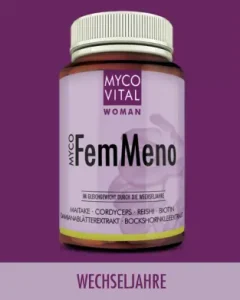
Bei uns steht Deine Individualität im Mittelpunkt. Es ist uns eine Herzensangelegenheit, maßgeschneiderte Produkte zu entwickeln, die auf besondere Bedürfnisse abgestimmt sind. Unsere Auswahl unterstützt dich dabei, den Alltag mit Leichtigkeit und neuer Energie zu meistern.
Do you have any questions?
With the exception of Cordyceps, Poria Cocos and CHAGA, we grow all our mushrooms in Limeshain in organic quality. These are a total of 11 different types of mushrooms.
With a few exceptions, we no longer grow button mushrooms in our company. In the meantime, we have specialized in the cultivation of medicinal mushrooms. We source the button mushrooms in the farm store from another grower from German production.
We basically cultivate in 2 different ways: – Cultivation on organic wood substrate – Cultivation on organic mushroom compost
As a rule, we buy mushroom spawn for the cultivation of organic mushrooms. The cultivation of mushroom spawn is a very complex process. We want to devote our resources and energy to the cultivation of mushrooms for our customers.
No. As a rule, we buy the mushroom spawn from individual (‘purebred’) mushrooms. We do not experiment with the mushroom varieties, but only use naturally developed and developing varieties.
– We first buy the components for the nutrient substrate of our mushrooms. This is mainly untreated wood. – We mix the untreated wood with the other organic components and sterilize the mixture at very high temperatures with steam so that unwanted germs that could inhibit the growth of the mushroom die off. Sterilization takes place in a so-called sterilization mixer. – Then, after a cooling phase, we fill the substrate into a food-safe plastic bag. Immediately afterwards, we add a certain amount of the so-called mushroom spawn (seeds) to our bags and seal these bags airtight. – These bags are then placed (depending on the type of mushroom) for several weeks in a sterile and climate-controlled room. Here, the mushroom must grow through the entire substrate. For this reason, we also call this phase the growth phase. After the mushroom has grown through the substrate (visual inspection), we take the bags out of the growth room and place them in the harvesting rooms. – In the harvesting rooms, our employees cut smaller openings in the bags. The harvesting rooms are computer-controlled. This means that, depending on the type of mushroom, fresh air supply, humidity, CO2 content in the air and the air and substrate temperature are controlled. In this way, we create individually optimal conditions for each type of mushroom. – When the fruiting bodies have grown out of the bags and have reached the optimal size, they are carefully harvested by hand by our employees.
– We cultivate two of our mushroom fruiting bodies on organic compost, as they grow best there. These are the Coprinus and the Agaricus Blazei Murill (ABM) – These mushrooms are not typical ‘wood mushrooms’, but thrive particularly well on organic compost. – We obtain the organic compost from a German organic compost company. – In our company, the compost is filled into special plastic containers. – At the same time, the mushroom spawn (seeds) is also added to the containers. – The containers are then transported to harvesting rooms. – There, the mushroom grows through the compost in certain computer-controlled climatic conditions. – When the compost is completely overgrown, we cover the compost with so-called ‘casing soil’ in a further step. This is a special soil that is suitable for organic production. – The fruiting bodies then grow through the casing soil in the following period. The harvest then takes place after a few weeks in several harvest waves by hand by our employees.
Specially filtered water. After that, the water is sterile.
The fruiting body is the part of the mushroom visible above the nutrient medium that everyone knows. This means the fruit that grows upwards and can be harvested later. The mycelium, on the other hand, is the part of the mushroom that lies underground in wild mushrooms and cannot be seen. In non-technical terms, the mycelium is the ‘root’ of the mushroom.
– We only use wood chips approved for organic production. These are no longer treated with pesticides or other chemicals after felling. – In principle, trees do not bind heavy metals in the wood, so that nothing of this can get into the fruiting body of the mushroom. Nevertheless, we always have our wood checked for residues and heavy metals by a certified laboratory. – Not all mushrooms can be grown on straw. With the exception of Coprinus and ABM, all other mushrooms are wood mushrooms.
The temperature of the rooms must be kept below 30°C so that the mushrooms can grow ideally. This means that the temperature is too low to operate a heat exchanger system efficiently.
The mushrooms need special climatic conditions to grow. At home, these are sometimes difficult to simulate. Fruiting bodies are only formed when the mushroom is shocked or wants to spread via the spores.
– We have built 12 new harvesting rooms. These can all be controlled individually with a computer. We can control the amount of air, the humidity, the CO2 content and the temperature of the air and the substrate in the rooms. The air supply to these rooms and the air extraction are filtered. In this way, we can create optimal growing conditions for each type of mushroom in an otherwise sterile environment. – We have built a new growth room. This room is climate-controlled and sterile. Here, our mushrooms can grow through in an optimal and germ-free environment. – We have built a new area for capsule filling. The capsule filling area is also hermetically sealed and sterile. We have also purchased new modern encapsulation machines so that our employees can fill the mushroom powder effectively and cleanly. – We have built a completely new and unique drying room with a specially developed technology. We have worked with local companies on this. The drying room and the drying concept are unique and specially developed for our needs so that we can dry very quickly and gently at a maximum of 32 degrees. With this method, we extract the water from the mushrooms in a very short time without affecting the ingredients with high temperatures. – We have built a completely new grinding area and purchased a modern mill with water cooling. The room is separated from the other production areas. The employees can grind and pack the dried mushrooms in a sterile environment. The grinding mechanism is water-cooled. This ensures that the mushrooms are not heated during grinding and that the ingredients are not affected.
– The European seal with the stars is mandatory in accordance with the EU Organic Regulation. It must be shown on organic products. – The German seal can only be shown after special registration in Germany.
We grow the vast majority of our mushrooms here in Germany in organic quality. We only regularly import the Cordyceps from the USA. – If the goods come exclusively from our company, they are marked with ‘German Agriculture’. – If the goods are a mixture of our own products and imports from the USA, they are marked with ‘EU/Non-EU Agriculture’. – If the goods come exclusively from the USA, they are marked with ‘Non-EU Agriculture’.
Our organic inspection body is Fa. ABCERT. The control number is DE-ÖKO-006. Further information can be obtained at http://www.abcert.de.
Our wood chips are certified. This means that our wood is no longer treated after felling. This is the prerequisite for organic certification.
– Because it is the only one that can be watered again after harvesting and that absorbs the water. All others do not allow subsequent irrigation. – We also only harvest one harvest wave and then dispose of the substrate
There are both methods, depending on the variety. Both are done by hand by our employees.
Yes, with Reishi we collect the spores separately and mix them back into the powder afterwards to have more spores in the powder. – Since we only harvest all mushrooms when they are ripe (shed spores), these mushrooms contain the spores in the powder that they have produced – The percentage of spores in the individual capsules varies from variety to variety, but it is always the same in the individual varieties
Approx. 5-10% are disposed of before harvesting (failure)
Between 6.3 and 7
– Because no more water is contained and the mushroom has largely eaten up the nutrients. – We hand over the ‘used’ organic substrate to a local organic farmer. The substrate is an excellent fertilizer in organic farming and is readily accepted.
– Infested blocks are disposed of immediately so that other blocks are not infested. – It can happen that mold gets into the bags through leaky weld seams. There it can sometimes prevail against the mushroom spawn of our (desired) mushroom.
– It is a natural product. Color and other visual changes are quite possible. Sometimes the same type of mushroom has a lighter and sometimes a darker color. We cannot influence this in every case. – However, you can be sure that it is always the same type of mushroom and that the ingredients are provided in sufficient quantity. – On the basis of the ‘four-eyes principle’, it is guaranteed that we always process the correct mushroom and label it accordingly.
– Here, too, it should be pointed out that it is a natural product. The growth of the mushrooms depends on many factors. We influence factors such as humidity, etc. However, we cannot guarantee absolutely identical conditions for every production. – However, you can be sure that it is always the same type of mushroom and that the ingredients are provided in sufficient quantity. – We guarantee you perfect goods by placing the highest demands on hygiene in production. – We also have our mushroom powder regularly tested by a renowned laboratory.
We are an organic company and therefore adhere to the prescribed standards. Our production is therefore free of any pesticides or fertilizers.
– Yes, pests are unavoidable in the cultivation of mushrooms. – In particular, we have to control flies that can nest in the substrate. We achieve this with means approved in organic farming (in accordance with the EU Organic Regulation), such as fly traps. – We do not use any insecticides or pesticides
– Our employees are regularly trained in compliance with hygiene regulations and constantly monitored. – We have developed and established our own HACCP concept (Hazard Analysis and Critical Control Points) in our company. We have used this to analyze critical points and are constantly working to eliminate potential problems from the outset.
– Yes, we have our products (both the end products and the ingredients for our substrate) regularly tested by the renowned German laboratory AGROLAB. – These tests are voluntary. We want to ensure that we pass on safe products to our customers. – In addition, we are also regularly inspected by the local food authorities. These also regularly take samples of our products and test them in their own laboratories.
The method and system of drying are unique and specially designed to dry our mushrooms quickly, cleanly, effectively and at a maximum of 32 degrees. With this drying method, we avoid heating the product. This means that important ingredients are retained. We only extract the water contained in the product without affecting any other components.
In general, you can assume as a rule of thumb that mushrooms consist of 80-90% water.
– We grind the mushrooms with a special mill that grinds the powder into particles of approx. 0.8 mm. – We make sure that the mushrooms do not get too hot in the mill. – The grinding mechanism in the mill is water-cooled. This ensures that the ingredients of the mushroom powder are not destroyed by heat.
We mix the two powders differently depending on the type of mushroom. This depends on the ingredients of the individual mushroom varieties. We do not want to provide exact details as it is a trade secret (own recipe).
– Our many years of experience have taught us that the capsules contain the right amount. – Dosage is a matter that depends on the individual. While one person only takes half a capsule or a mixture, others dose 2 capsules 3 times a day. In general, the tenor is very positive on 3×1.
Max. 32 degrees, as the mill is cooled.
As fine as possible so that the temperature of 32 degrees is not exceeded. Up to a diameter of 0.8 mm. The fruiting bodies cannot be ground as finely as flour.
– This depends on how often it has to be compacted until the capsules are filled. – The employees in the filling department have many years of experience with the individual mushroom varieties and can determine when the capsules are full. – As it is a natural product, the powder does not always trickle evenly into the capsules. The structure of the powder is subject to fluctuations, which means that individual batches have to be compacted more often.
– Loose powder has the disadvantage that the customer would have to measure it with laboratory precision. The capsule is a dosing aid and we ensure that the customer always takes a consistent amount. – Unfortunately, dosing with a spoon or similar is not possible due to the highly variable structure of the mushroom powder. – The powder could be contaminated if it is removed with a spoon. Capsules are therefore also more hygienic.
The amount of loss is very small. The extracted powder is disposed of.
– Fresh mushrooms are difficult to compare with our capsules. Our mushrooms are processed immediately after harvesting. A fresh mushroom can spend several days to weeks in transit before finally reaching the customer. Even if the customer gets the mushroom relatively fresh, it is possible that the mushroom was harvested unripe and therefore the spores are not yet or only partially formed.
Except for the product with green-lipped mussels, all our products are vegan. When processing the green-lipped mussels, we make sure that they do not come into contact with other products.
– We do not add any other substances to our mushroom powder products (preservatives, flavor enhancers, etc.).
No, all our products are lactose-free.
No, all products are free of binding agents and preservatives. Including the capsules.
We use cellulose capsules (more precisely: hydroxypropylmethylcellulose). These capsules are purely plant-based and approved for organic production.
In general, carbonic acid acidifies the body. Therefore, it is generally better to drink still water.